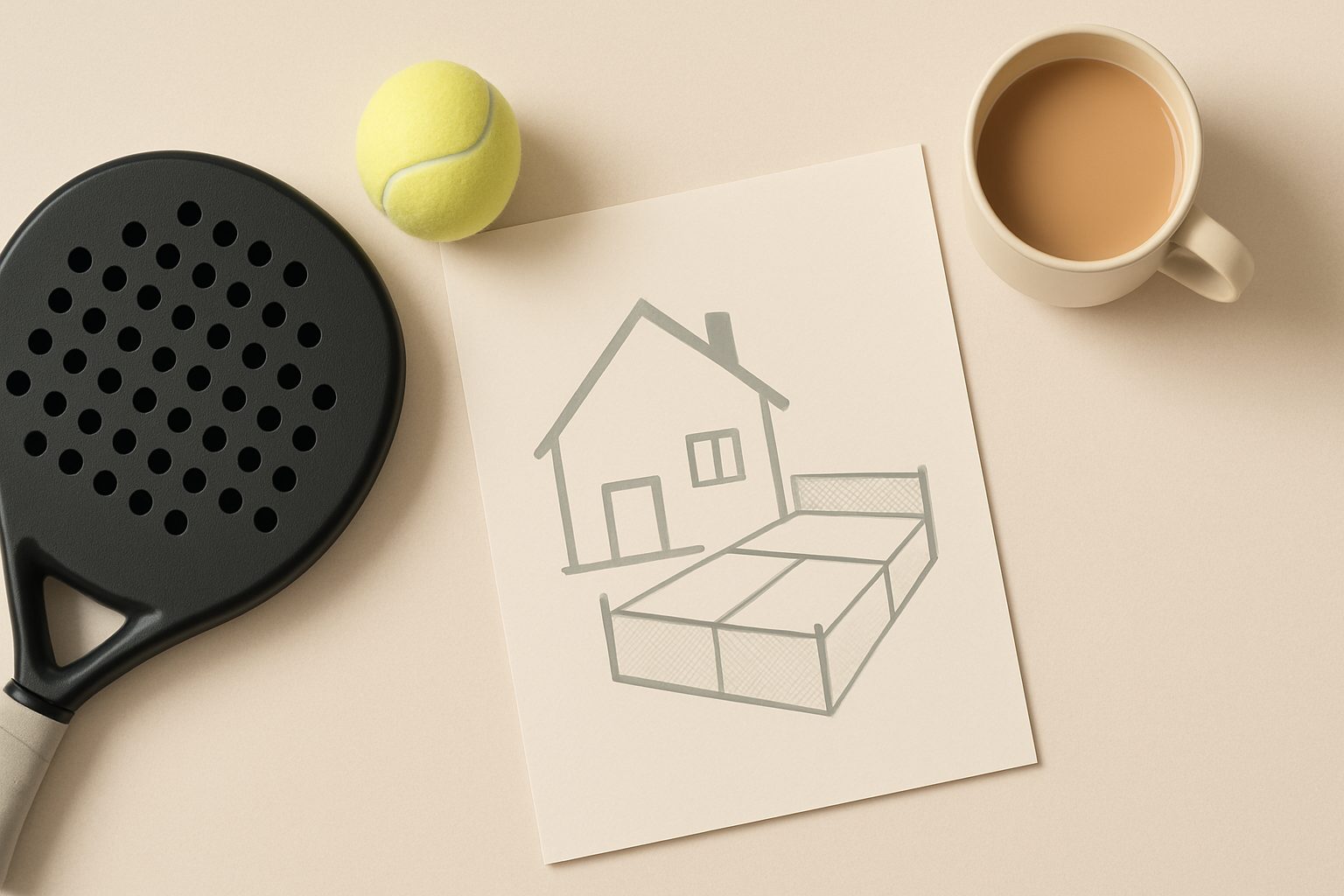
Best Padel Court Fencing & Glass Enclosure Suppliers UK: Top Picks Reviewed
Getting the enclosure right is crucial if you're building a padel court at home. It protects neighbouring properties, keeps the ball in play, and defines the playing space properly. But padel court enclosures aren't one-size-fits-all — the choice between panoramic glass, wire mesh, and hybrid systems depends on space, budget, and what you're trying to achieve.
Panoramic Glass Enclosures
Panoramic glass is the premium option and increasingly popular in the UK, especially for courts visible from the house. Full-height tempered glass walls create an impressive sightline and reduce noise significantly compared to mesh systems. They're also lower maintenance — no rust risk, easy to clean, and they look professional.
The trade-off is cost. Expect to pay substantially more upfront for glass than mesh, and you'll need reinforced foundations to handle the weight. Tempered glass is safety-rated, but it's still glass — if a panel does break, replacement is a specialist job. Condensation can form in cold, damp conditions, though proper ventilation helps.
UK suppliers like Netting Technology and Hittnet stock panoramic glass systems alongside their mesh offerings. Many padel court builders work with glass fabricators directly to custom-fit installations. If you're using a court installer, ask whether they manage glass procurement or whether you're buying separately.
Wire Mesh Enclosures
Wire mesh remains the most common choice for UK home courts. It's significantly cheaper than glass, easy to install, and fully visible from all angles — great for coaching and spectating. Standard galvanised steel mesh resists rust well in most UK climates, though coastal areas may see corrosion over time.
The downside is noise. Even good-quality mesh transmits ball impacts loudly, which matters if your neighbours are close. Sound deadening panels can help, but they add cost and obstruct views. Mesh also requires periodic inspection for damage and rust treatment if any bare metal shows.
Suppliers like Padel Pro UK, Court Systems, and Hittnet stock pre-engineered mesh systems. Posts are typically powder-coated steel or aluminium. Galvanised mesh (rather than plastic-coated) performs better long-term in UK weather.
Hybrid Enclosures
Hybrid systems combine glass and mesh — usually glass on the back wall and sides for player visibility, with mesh ends or lower mesh sections to reduce cost. This offers a sensible middle ground: cleaner sightlines than full mesh, better noise than full glass, and lower cost than panoramic glass throughout.
Some installers use glass on the lower half and mesh on upper sections, which improves visibility for a crouching player while keeping costs down. Others specify glass on the back wall only, which gives you a professional look at the street-facing side while keeping side enclosures as mesh.
Key Considerations When Choosing
Space and clearance. Glass requires accurate measurement and professional installation — even small mistakes can leave gaps. Mesh is more forgiving. If you're retrofitting into an awkward space, mesh is usually easier.
Neighbours and noise. If properties are immediately adjacent, glass or sound-dampened hybrid is worth the extra cost. Full mesh can generate complaints about ball noise, especially during evening play.
Maintenance. Wire mesh needs occasional inspection and rust treatment. Glass is cleaner but more brittle. Hybrid systems require you to maintain both.
Foundation requirements. Glass is heavier and needs solid, level footings. Mesh systems are lighter but still need proper post foundations — corners bear the most load.
Weather exposure. UK coastal areas experience salt spray corrosion. Stainless steel mesh or glass is better than standard galvanised; aluminium posts are less susceptible than steel. Inland, standard galvanised mesh holds up well.
Finding Reliable Suppliers
Most UK padel court suppliers stock one or two enclosure systems as standard, so you're often limited by your installer's preferred partners. If you're building the court yourself, approach established fencing and sports-surface companies directly — many can supply materials separately.
Before committing, ask suppliers for references on similar installations, particularly their experience with UK weather. Request photos of installations two or more years old so you can see how materials have actually weathered. Cost estimates should be clear about whether they include delivery, installation, and post-setting.
Expect quotes to vary significantly. Glass costs roughly double mesh for the same court size, plus installation labour. Budget for 30–50% contingency if you're working with specialist fabricators — bespoke work often surprises on hidden costs like foundational preparation.
Conclusion
For most UK home padel courts, standard wire mesh offers the best value, especially if neighbours aren't immediately adjacent. If you're serious about noise or you want a visually striking court, hybrid or full glass is worth the investment. Whatever you choose, prioritise suppliers with UK installation experience and a track record of systems that hold up to British weather. The enclosure is the biggest visual commitment on your court — get it right and you'll enjoy years of reliable play.
More options
- Padel Rackets & Starter Bundles (Amazon UK)
- Padel Balls (ITF & FIP Approved) (Amazon UK)
- LED Sports Floodlights for Padel Courts (Amazon UK)
- Padel Ball Machines (Amazon UK)
- Padel-Spec Artificial Grass & Sand Infill (Amazon UK)