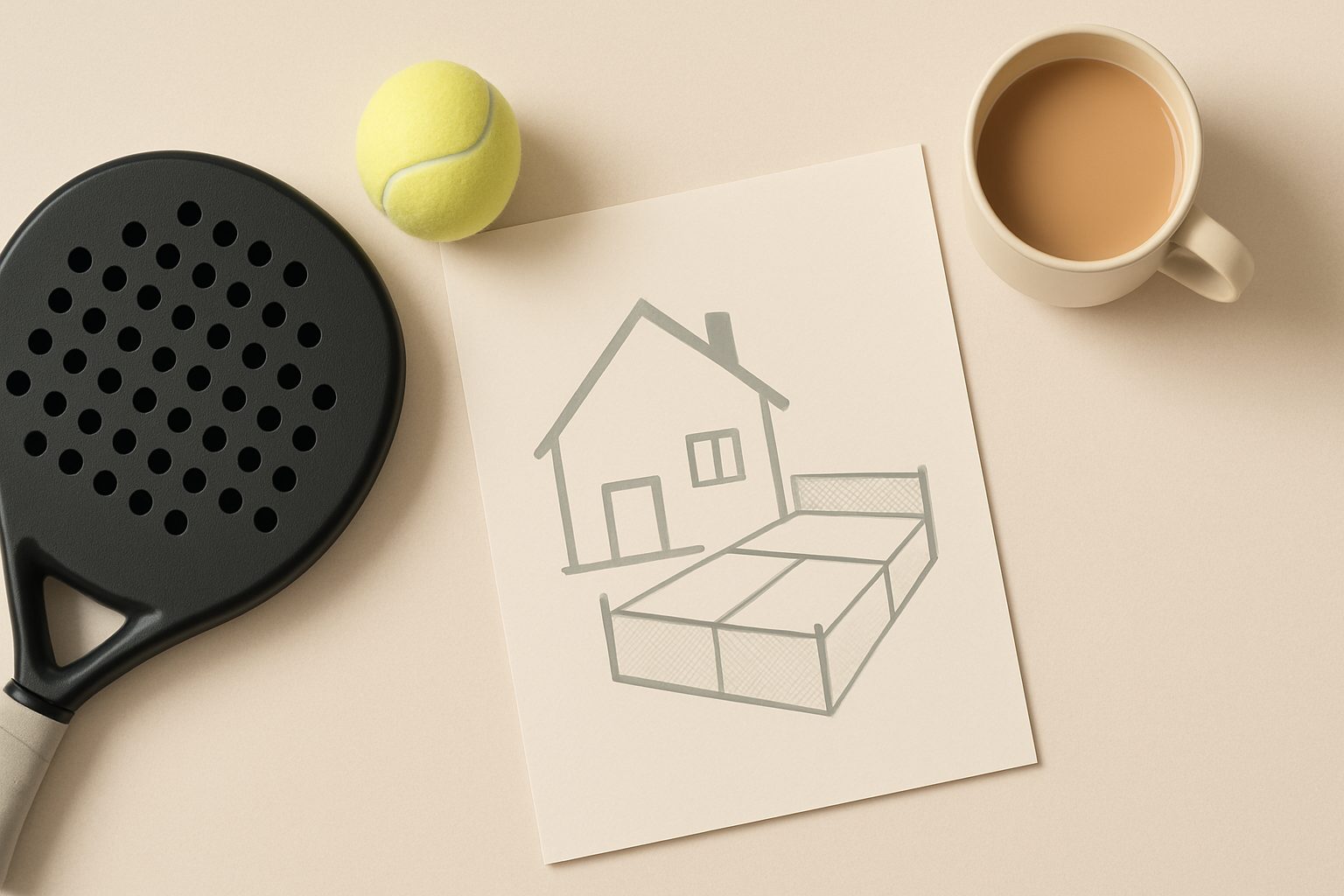
Indoor Home Padel Court Installation UK: Costs, Space & Planning Guide
Converting a barn, garage, or disused sports hall into an indoor padel court is increasingly popular among UK enthusiasts who want year-round play without relying on outdoor facilities. The sport requires less space than tennis yet demands more structure than casual backyard play. Here's what you need to know before committing to the project.
Space Requirements
A regulation padel court measures 10m × 20m, though indoor conversions don't have to follow tournament dimensions exactly. Most home installations aim for 9m × 18m minimum to allow comfortable rallies and movement. You'll need additional space around the court for entries, storage, and air circulation—roughly 11m × 21m total is realistic.
Barn conversions work well because they typically offer height flexibility. Padel needs 4m ceiling height as a baseline; 4.5m is more comfortable for overhead shots. Garages are tighter—a single-bay garage won't suffice, but a double garage (roughly 6m × 6m) could theoretically squeeze in a smaller 6m × 12m teaching court, though this is cramped for real play. Sports halls offer the most straightforward conversion since they're usually built to appropriate dimensions already.
Cost Breakdown
Installation costs vary significantly by location and existing building condition:
- Court surface and frame: £8,000–£16,000. This includes the aluminium frame, glass back wall, and playing surface. Some suppliers offer sprung flooring systems that reduce impact and extend court life, costing extra but worth considering if you're playing several times weekly.
- Lighting: £3,000–£7,000. Decent indoor padel requires proper LED systems—basic LED arrays cost around £3,000, whilst professional-grade systems with better colour rendering and fewer shadows reach £7,000 plus. Poor lighting is a false economy; you'll regret it immediately.
- Building work: £5,000–£20,000+. This depends entirely on your space. A barn with a solid floor and weathertight roof might need only interior finishing. A garage conversion requires reinforcement of walls, proper drainage, and potentially heating. Structural surveys often reveal surprises.
- Heating and ventilation: £2,000–£6,000. Indoor courts generate moisture from sweat and require good airflow to prevent condensation and mould. Underfloor heating makes winter play comfortable but adds expense.
- Total rough estimate: £18,000–£50,000 depending on starting conditions.
These figures exclude land you own outright. If you need to purchase property specifically for this, costs multiply dramatically.
Installation Considerations
Flooring is worth spending on properly. Standard wood courts are fine, but sprung flooring systems reduce joint stress and improve ball response. They cost 20–30% more upfront but pay dividends over years of play.
Lighting design matters more than you'd think. Overhead panels alone create shadows around the net. Professional installers angle lights to illuminate the court from multiple points. If you're ordering LED systems, specify lux levels appropriate for padel (around 500–800 lux for recreational play, 1000+ for serious training).
Glass back wall is standard and necessary—it's not just for looks. The back wall (and usually the sides) are constructed from tempered glass, which is expensive but essential for safety and ball visibility.
Climate control is often underestimated. A sealed indoor court in the UK without proper ventilation becomes humid within weeks, especially during winter. You need extraction systems that remove excess moisture and prevent condensation on glass. Heating is optional but makes winter play pleasant; many owners install efficient heat pumps rather than traditional heating.
Planning Permission and Building Regulations
This varies by local authority, but most conversions fall within building regulations requiring approval. A barn conversion typically requires planning permission if it's a material change of use—check with your local authority first. Some councils require planning even for barn conversions within agricultural buildings.
Building regulations approval is almost always needed, covering structural integrity, fire safety, and electrical systems. Budget time (8–12 weeks) and money (£1,000–£3,000) for approvals. Skipping this creates problems when selling your property.
Maintenance Reality
Indoor courts require regular maintenance. The playing surface needs occasional sweeping and cleaning. Glass needs regular washing, particularly the back wall where it gets scuffed. The ventilation system needs filters changed every 3–6 months. Budget £500–£1,000 annually for upkeep.
Lighting systems last 10–15 years typically. Resurfacing the court costs £3,000–£6,000 and is needed every 8–10 years depending on usage intensity.
Is It Worth Doing?
Home installation makes sense if you play regularly (3+ times weekly) or live far from public facilities. If you're a casual player or there's a decent club nearby, the financial commitment isn't justified. The space and cost requirements are genuine—this isn't a hobby project you can do cheaply.
That said, once installed, having a court available at convenient hours transforms your game. No waiting for bookings, no travel time. For committed players with suitable space and budget, it's genuinely worthwhile.
More options
- Padel Rackets & Starter Bundles (Amazon UK)
- Padel Balls (ITF & FIP Approved) (Amazon UK)
- LED Sports Floodlights for Padel Courts (Amazon UK)
- Padel Ball Machines (Amazon UK)
- Padel-Spec Artificial Grass & Sand Infill (Amazon UK)